How to Start a Travel Agency: A Practical Guide for Entrepreneurs
Before you can start booking dream vacations for others, you need a solid game plan for your own business. Think of this as the architectural blueprint for your agency. It's not just some document you write once and forget; it's a living guide that will shape every decision you make down the road. A well-thought-out plan is your best defense against the common pitfalls that trip up new entrepreneurs.
Your Blueprint For A Successful Travel Agency
This initial planning phase is all about making deliberate choices that will define your agency’s future. It starts with carving out a profitable niche that actually sets you apart.
Trying to be everything to everyone is a fast track to getting lost in the noise. Instead, pinpoint a specific market. For example, rather than just "luxury travel," you could specialize in "all-inclusive wellness retreats in Southeast Asia" or "multi-generational family cruises in the Caribbean."
Defining Your Niche and Value
Finding your focus is the single most important first step. When you have a specific niche, you can craft marketing messages that truly resonate, build up targeted expertise, and frankly, command higher service fees. It's the difference between shouting into a crowded room and having a meaningful one-on-one conversation.
Once you’ve got your niche figured out, the next move is to do a little recon on your competitors. This isn't about copying them—it's about finding the gaps in the market. What are the successful agencies in your niche doing well? Even more importantly, what are they not doing? Maybe they have terrible follow-up, or they don’t offer the specialized add-ons you know clients would love. That's your opening.
This visual breaks down these foundational steps, from identifying your niche to analyzing the competition and planning your financials.
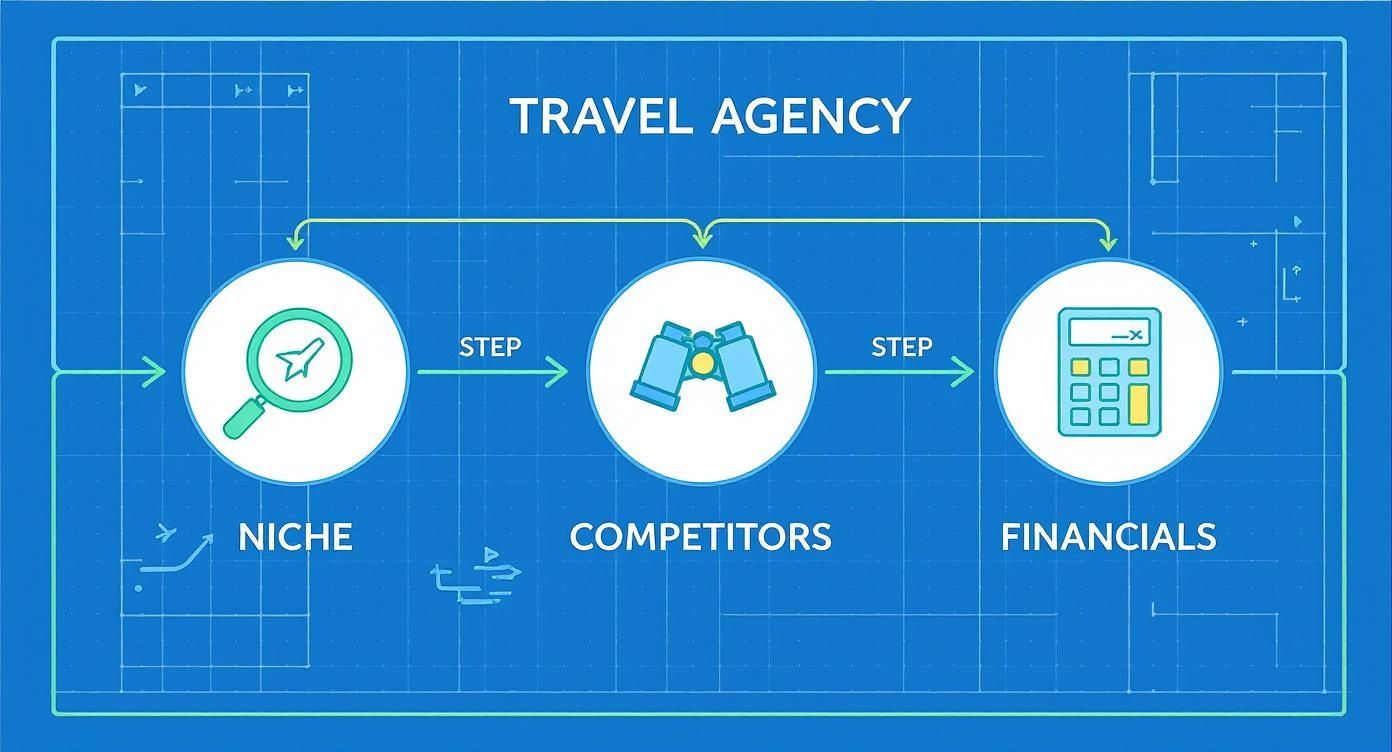
Each step builds on the last, creating a strategic framework that ensures your business is built on solid ground.
Creating A Realistic Financial Forecast
Let's talk numbers. A clear financial forecast is non-negotiable. The travel agency industry is surprisingly resilient, with global revenue projected to hit $157.74 billion in 2025. The UK market alone was valued at £29.4 billion in 2024, which shows there’s plenty of opportunity for new agencies that plan smart.
Your bread and butter will likely be commissions from suppliers (hotels, cruise lines, tour operators), which typically range from 10% to 15% of the booking price.
Forecasting means estimating your startup costs, ongoing operational expenses, and what you realistically expect to earn in your first one to three years. Here's a rough idea of what those initial costs might look like for a home-based or online agency.
Startup Cost Breakdown for a New Travel Agency
| Expense Category | Estimated Cost Range (Low End) | Estimated Cost Range (High End) | Notes |
|---|---|---|---|
| Business Registration & Licensing | $100 | $800 | Varies by state/country. Includes LLC formation, business licenses. |
| Host Agency or Consortium Fees | $0 | $1,500 | Initial setup/annual fees. Some have monthly options instead. |
| Professional Insurance (E&O) | $400 | $1,000 | Errors & Omissions insurance is crucial. This is an annual premium. |
| Website & Branding | $500 | $5,000 | Covers domain, hosting, theme/template, and professional logo design. |
| CRM & Booking Software | $300 | $1,200 | Annual subscription for a client management and booking platform. |
| Marketing & Advertising | $500 | $2,500 | Initial budget for online ads, social media, and content creation. |
| Office Setup & Tech | $300 | $2,000 | Laptop, phone, printer, and basic home office supplies. |
| Training & Certifications | $200 | $1,000 | Niche-specific certifications or supplier training programs. |
Disclaimer: These are general estimates. Your actual costs will depend on your specific business model, location, and choices.
Getting a handle on your numbers early is absolutely crucial. As you pull all of this together, a solid approach to strategic planning for small business will give you the foundation you need for long-term success. This initial blueprint becomes your North Star, guiding everything from your marketing budget to the technology you invest in.
Navigating Legal and Financial Requirements

Let's talk about the administrative side of launching your agency. While it might feel a bit intimidating, getting your legal and financial house in order from day one is absolutely non-negotiable. It's the foundation that protects you, your money, and your future clients.
The first big choice you'll make is your business structure. A lot of new entrepreneurs lean towards a sole proprietorship because it’s quick and cheap to get started. The problem? This structure offers zero liability protection. If your business gets into legal hot water, your personal assets are on the line.
That's why forming a Limited Liability Company (LLC) is almost always the smarter long-term move. An LLC acts as a legal shield between your business and personal finances, which is critical. Yes, it involves a bit more paperwork and a few extra dollars, but the peace of mind you get when you start handling client payments is priceless.
Securing Essential Licenses and Insurance
Once your business is officially registered, it's time to tackle licenses and insurance. These requirements can change dramatically depending on where you live, so you'll need to do your homework.
A big one to look out for is the Seller of Travel (SOT) law. States like California, Florida, and Washington have strict rules that require travel agencies to register and sometimes even post a bond. Trust me, you don't want to get caught operating without the right SOT license—the fines can be crippling.
Insurance is another must-have. Here’s what you absolutely need:
- Errors & Omissions (E&O) Insurance: Think of this as your professional safety net. It protects you if a client sues over a mistake, like booking the wrong hotel or giving bad travel advice.
- General Liability Insurance: This covers claims of injury or property damage related to your business.
Don't ever treat insurance as an optional expense. One unexpected disaster—a tour operator going bust, a client getting injured on a trip you booked—could wipe you out financially without the right coverage. It's a fundamental cost of doing business the right way.
Establishing Your Financial Systems
With the legal stuff sorted, the final piece of the puzzle is organizing your finances. The most important thing you can do right now is open a dedicated business bank account and credit card. Mixing personal and business money is a recipe for an accounting nightmare, and it can even break the liability protection your LLC provides.
Next up, get yourself some accounting software. User-friendly platforms like QuickBooks, Xero, or Wave make it easy to track income, manage expenses, and get ready for tax season without tearing your hair out.
Setting these systems up from the start gives you a clear view of your financial health from day one. Solid financial management is also a key part of building a strong business travel framework; you can see how the pros do it by checking out a good corporate travel policy template.
Building Your Brand and Digital Presence
With your legal and financial foundations firmly in place, it’s time to give your travel agency a face and a voice. In a market flooded with options, your brand is so much more than a logo—it’s the story you tell and the trust you build. It’s what makes a traveler pick you over everyone else.
What makes your agency different? Maybe you’re the go-to expert for sustainable travel in Canada or specialize in historical tours of the UK. Whatever your unique angle is, it needs to be the common thread woven through everything you do, from your color palette to the photos you post online. This consistency is how you become memorable.
Creating a Powerful Online Hub
Think of your website as your digital storefront. It has to work hard for you. The days of it being a simple online brochure are long gone. The numbers don't lie: in the first quarter of 2025, a staggering 72% of all travel bookings were made online. Even more telling, over 45% of those happened on a mobile device. You can discover more insights about travel statistics on traveloperations.com to see just how critical this is.
This means a mobile-friendly website isn’t a nice-to-have; it's everything.
To give modern travelers what they expect, your site absolutely needs:
- A Seamless Booking Engine: Let people search, customize, and pay for their trips without ever having to leave your site. Make it easy.
- Stunning Visuals: Use high-quality photos and videos that don't just show a destination but sell the experience. You want to spark that "I have to go there" feeling.
- Obvious Calls to Action: Don't make visitors guess what to do next. Guide them with clear buttons like "Book a Consultation" or "Explore Our UK Tours."
Establishing Authority Through Content
One of the best ways to attract your ideal clients is to stop selling and start helping. Your blog is the perfect place to do this. By creating genuinely useful content, you build a loyal audience and position yourself as the expert they can trust.
Your content strategy should answer the questions your ideal clients are already asking. Think like a traveler planning a trip—what are their pain points? What information do they need to feel confident and prepared?
For example, you could write a detailed guide on "A Food Lover's Tour of the UK" or "How to Navigate Canada's National Parks by RV." These kinds of articles pull in organic traffic from search engines and prove you know your stuff.
And as you write, be sure to cover the practical details. If you're promoting trips to Canada for visa-exempt travelers, a post explaining the Electronic Travel Authorization for Canada is incredibly valuable. This kind of content doesn't just attract visitors—it builds the trust that turns them into paying clients.
Forging Smart Industry Partnerships
Let's be honest: no travel agency can thrive on its own. Your ability to create those jaw-dropping itineraries comes down to the quality of your relationships with suppliers, tech providers, and other service partners. Think of these connections as the scaffolding of your business—they give you access to inventory, better rates, and the tools you need to stand out.
One of the first big forks in the road you'll face is deciding whether to join a host agency or go fully independent. A host agency gives you a massive head start, plugging you directly into an established supplier network and offering crucial back-office support. It’s a fantastic option for newcomers. Flying solo, on the other hand, gives you total control, but it means you're building every single one of those relationships from the ground up.
Building Your Network of Suppliers and Services
Whether you go with a host or blaze your own trail, you still need to put in the work to cultivate direct relationships. This means getting on a first-name basis with the Business Development Managers (BDMs) at the cruise lines, tour operators, and hotel chains that fit your niche. Get yourself to industry trade shows, jump into travel agent forums, and don't be shy about reaching out.
But think beyond the obvious partners. What are the real pain points your clients face? International travel often comes with confusing entry requirements, and that’s a major source of stress. This is exactly where a smart partnership can elevate your service from good to indispensable.
A partnership for travel authorizations is a total game-changer. It takes what could be a client's biggest headache and turns it into a seamless, 'handled-for-you' part of the process. That's how you prove your value.
Simplify Travel with a Partner You Can Trust
For clients heading to places like the United Kingdom or Canada, many visa-exempt travelers now need an Electronic Travel Authorization (ETA). The application can be tricky, and one tiny mistake can cause delays or even a flat-out denial. This is your chance to be a hero.
Instead of wishing them luck and sending them off to a government website, you can guide them to a trusted third-party application assistance provider like AssistEntry. Their experts take the entire process off your client's plate.
- Full Application Review: Every single detail gets a second look to ensure it’s accurate and compliant.
- Expert Error-Checking: They catch the common mistakes that often lead to rejections.
- Better Approval Odds: Professional handling gives your clients the best possible chance of a quick, smooth approval.
By recommending this service, you're not just selling travel; you're selling peace of mind. To simplify your travelers' UK ETA application and increase their chances of approval, consider using AssistEntry's UK ETA page — their experts guide you through the entire process, starting from just $79, which includes the government fee and all costs.
If you want to get a better handle on the rules yourself, you can also dive into our guide comparing the UK visa and the ETA system.
Marketing Your Agency to Find Your First Clients
You've built your agency, handled all the legal paperwork, and you're officially ready to start planning incredible trips. Now for the fun part: finding your first clients.
Marketing isn't just about shouting from the rooftops. It's about making genuine connections with your ideal travelers in the places they already spend their time. Forget about sinking money into expensive ad campaigns right now. Your best tools are visual storytelling and authentic engagement.
Get Noticed with Social Media and Smart Content
Platforms like Instagram and Pinterest are absolute gold for new travel agencies. They're visual, they're inspirational, and they let you showcase what makes you different.
Think of your social media not as a sales brochure, but as a go-to resource. If you specialize in UK travel, don't just post a pretty picture of London. Create a Pinterest board of "Hidden Castles in the Scottish Highlands" or a short video on "How to Spend a Perfect Day in Bath." This builds trust and immediately positions you as the expert they need.
Another non-negotiable is your email list. Start building it from day one. Offer something genuinely useful on your website in exchange for an email address—maybe a downloadable packing list for Canada or a guide to London's best street food. Then, send them content that helps, not just sells. Share travel stories, insider tips, and every now and then, an exclusive offer.
Craft Packages They Can't Resist
Once you start building an audience, you need to give them something to buy. This is where your niche expertise and supplier relationships come together to create travel packages that solve a real problem for your clients.
Don't just offer a generic "UK Trip." Get specific.
- The British Gin Trail: A 7-day self-drive tour for gin lovers, complete with distillery tours and stays in boutique hotels.
- Canadian Rockies Family Adventure: A 10-day itinerary built for families with young kids, focused on accessible hikes and wildlife spotting tours.
Specificity is your superpower. The demand for travel is back in a big way, with global tourism expected to hit 98% of pre-pandemic levels by the end of 2024. But with around 589,000 travel agency businesses operating worldwide, you have to stand out. Specialization is how you do it.
To get a better sense of the industry landscape, you can explore the full travel agency services market report.
Don't Forget About the Real World
As powerful as digital marketing is, never underestimate the value of face-to-face connections. Go to local business networking events. Talk to people in community groups. Let your friends and family know exactly what you do and who you help.
Word-of-mouth is still one of the most powerful marketing tools on the planet. Your first few clients are often hiding in plain sight, right in your own backyard. Those initial bookings are absolutely critical—they'll provide the testimonials and referrals you need to really get your agency growing.
Common Questions About Starting a Travel Agency

Diving into a new business always kicks up a lot of questions. Getting straight answers is the only way to move forward with confidence and sidestep the usual rookie mistakes. Let's tackle some of the most common things aspiring travel agency owners ask.
How Much Does It Really Cost to Start a Travel Agency?
Startup costs can swing wildly depending on the path you choose.
If you go with a host agency, you can get your business off the ground for less than $1,000. That usually covers your initial fees, some training, and basic marketing materials. There's a reason this is such a popular route—it’s incredibly cost-effective.
On the flip side, launching a fully independent agency is a bigger financial commitment. You’ll want to budget anywhere from $2,000 to $10,000+ for essentials like a custom website with a booking engine, Errors & Omissions insurance, legal registration, and software subscriptions. Your choice between a host or independent model is the single biggest factor that will shape your startup budget.
How Do Travel Agents Make Money and Is It Profitable?
The classic income stream is commissions from suppliers like hotels, cruise lines, and tour operators. These typically fall in the 10-15% range of the booking value. But the game has changed quite a bit.
Many modern agents now charge professional service or planning fees, especially when crafting complex, custom itineraries. This ensures you’re paid for your time and expertise, not just the final booking.
Profitability is absolutely within reach, but it all comes down to your niche, how many clients you can attract, and how well you manage your expenses. Zeroing in on high-margin specialties, like luxury travel or group tours, can seriously boost your income potential.
What Is a Host Agency and Should I Join One?
Think of a host agency as a launchpad. It’s an established company that gives independent agents the tools, credentials, supplier connections, and back-office support they need to run their business. For most people just starting out, joining a host is the smartest first move.
Joining a host agency dramatically lowers the barrier to entry. It gives you instant credibility, access to higher commission tiers you couldn't get on your own, and a vital support community. You trade a portion of your commission for invaluable resources that let you focus on what you do best: selling travel.
Do I Need Specific Qualifications to Be a Travel Agent?
While you don't need a specific college degree, you absolutely need deep industry knowledge. Certifications like the Certified Travel Associate (CTA) can add a ton of credibility and show you’re serious about your profession.
Honestly, though, the most important qualifications are often your own real-world travel experience, killer organizational skills, and a genuine passion for creating incredible trips for your clients.
A huge part of your job is guiding clients through complex travel rules. For example, understanding passport requirements for cruises is a common area where clients will look to you for expertise. The same goes for visa regulations, so it's a good idea to read up on topics like whether American citizens need a visa for the UK in our detailed guide.
Navigating complex travel rules, like the UK ETA application, can be a major hurdle for your clients. Partnering with a trusted third-party application assistance provider like AssistEntry provides a seamless solution. To simplify your clients' travel and increase their chances of approval, consider using AssistEntry's UK ETA page—their experts guide them through the entire process, starting from just $79.